
0 Views
Department of Entomology, S.V. Agricultural College, ANGRAU, Tirupati-517 502.
Roving surveys were conducted during kharif season of 2024 in major rice growing areas of Y.S.R. Kadapa, Nellore, and Annamayya districts to assess the incidence of major insect pests in rice. Insect pest incidence observation was taken at vegetative and reproductive stages of rice. During the present investigation, four insect pests viz., Scirpophaga incertulas (Yellow Stem Borer), Cnaphalocrocis medinalis (Leaf folder), Nilaparvata lugens (Brown Planthopper), and Orseolia oryzae (Gall midge) were recorded as major pests in rice field. Among them, yellow stem borer and leaf folder were found as highly abundant insect pest of rice cultivated in the study area. Insecticide usage patterns also showed that farmers exclusively relied on chemical insecticides, with 24 insecticides belonging to six insecticide groups and six combination products being used. Novel insecticides (38%) and combination insecticides (28%) were the most widely adopted. Regarding pesticide appliances, out of 90 farmers, power sprayers were most commonly used (52.22%), followed by knapsack sprayers (28.89%) and Unmanned Aerial Vehicles (18.89%) in the study area.
KEYWORDS: Rice, insect pests, incidence, insecticides usage, survey.
Rice, Oryza sativa (Poaceae) is the most important crop of the world and second largest cultivated cereal crop after wheat which occupies foremost status in human food requirement. It is cultivated in almost all tropical, subtropical and temperate countries and is the staple food of over half of the world’s population and 90 per cent of Asians (Kumar et al., 2023). Raw rice is a good source of nutrients, which contains 7-8% protein, 3% fat, 77-84% carbohydrate, 3% fibre and a good source of thiamine (Vitamin B1) and riboflavin (Vitamin B2) together with eight essential amino acids (Chaudhari et al., 2018). In India, it covers an area of 47.8 million hectares with an annual production of around 138 million metric tons. In Andhra Pradesh, rice is grown in an area of 58.75 Million hectare with production of 128.95 Million tonnes and productivity of 2385 kgs per hectare respectively. (INDIASTAT, 2024).
However, farmers face huge economic losses in rice cultivation in every year. Reduction in the rice yield is due to many biotic and abiotic stresses such as, pests, diseases, soil fertility, rainfall, water logging and climatic conditions. Pests cause 30% production loss in India (Sachan et al., 2006 and Dhaliwal et al., 2010). About 100 species of insects have been reported to attack on rice crop in India, out of which, yellow stem borer (YSB) (Scirpophaga incerulas Walker), brown planthopper (BPH) (Nilaparvata lugens Stal), white backed planthopper (WBPH) (Sogatella furcifera Horvath), leaf folder (Cnaphalocrocis medinalis Guenee) are very important and can cause 21 to 51 per cent yield loss in different rice agro ecosystems. (Nikhil et al., 2021).
The yield loss estimates due to yellow stem borer, brown plant hopper and gall midge are 25-30, 10-70 and 15-60%, respectively, leaf folder (10%) and other pests (25%) also causes yield losses (Krishnaiah and Varma, 2013). The major factors that have contributed towards changes the pest scenario are extensive cultivation of high yielding susceptible intensified rice cultivation throughout the year providing constant niches for pest multiplication, imbalanced use of fertilizers, particularly application of high levels of nitrogen, non-judicious use of insecticides resulting in pest resistance to insecticides, and resurgence of pests and out breaks of minor pests.
Scirpophaga incertulas (Walker) is a monophagous pest of rice that belongs to order Lepidoptera and family Pyralidae. This pest is most destructive pest and found almost all region of world. Symptoms of this pest is characterised by “dead heart” at vegetative stage and “white ear” at reproductive stage. Nilaparvata lugens are sucking pest of rice that belong to order Hemiptera and family Delphacidae, damage symptoms by “Hopper burn”. Higher population of leaf folder (Cnaphalocrocis medinalis) was found in kharif season during 1995-1997 by Prasad (2003). The young larvae of leaf folder feeds on tender leaves without folding them while older larvae feed inside older folded leaves. Leaf folder belongs to order Lepidoptera and family Pyralidae. Gall midge (Orseolia oryzae) belongs to the order Diptera and family Ceccidomyiidae, damage symptom of this pest is characterized by “silver shoot”. Hence, this present study was carried out to know the major insect pests incidence on rice during kharif season.
Roving surveys were conducted during kharif 2024 to assess the incidence of major insect pests of rice across various locations in Y.S.R. Kadapa, Nellore, and Annamayya districts of Andhra Pradesh. In each district, three mandals were selected, in each mandal two villages were selected and in each village, five farmer fields were selected.
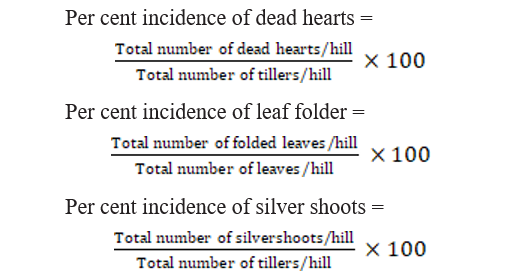
Field scouting was carried out in farmers’ fields to record the incidence of yellow stem borer, leaf folder, and gall midge at the vegetative stage, while brown planthopper (BPH) incidence was noted at the reproductive stage. Observations included the rice varieties grown, the insecticides used for pest management, and the methods of their application. In each location, the survey plot was divided into four quadrants of approximately 200 m2. In each quadrant 20 hills were selected diagonally for observation, the information regarding the insecticides were confirmed by the local farmers. The observations on stem borer, leaf folder, gall midge and BPH infestation was recorded by counting the number of plants with and without symptoms. Percentage of damage extent of insect pests was computed by following formula proposed by Singh and Singh, 2017.
In Y.S.R. Kadapa district, yellow stem borer incidence varied from 4.98 to 12.70 per cent dead hearts during the vegetative stage, and 9.74 to 17.49 per cent white ears during the reproductive stage with highest mean per cent dead hearts incidence in Proddatur mandal. Leaf folder infestation with village-wise ranging from 8.84 to 19.72 per cent, and the highest mean leaf damage of 19.60 per cent recorded in Rajupalem mandal. Rice gall midge incidence ranged between 1.88 per cent and 6.12 per cent silver shoots across villages, with relatively higher incidence observed in Duvvur mandal (5.62 per cent). Brown planthopper populations ranged from 1.58 to 13.82 per hill, with the highest population recorded in Proddatur mandal (Table 1).
Similarly in Nellore district, yellow stem borer incidence ranged from 8.06 to 11.54 per cent dead hearts during the vegetative stage, and 10.94 per cent to 13.32 per cent white ears during the reproductive stage. The highest mean incidence was recorded in Sullurupeta mandal. Leaf folder infestation varied between 5.53 per cent and 10.44 per cent at the vegetative stage, 9.79 per cent and 10.99 per cent at the reproductive stage. The highest mean incidence of 10.87 per cent in Jaldanki mandal. Rice gall midge incidence ranged from 3.66 per cent to 8.82 per cent, with Sullurupeta mandal showing relatively higher infestation. Brown planthopper populations were moderate, ranging from 2.88 to 5.16 per hill during the reproductive stage (Table 1).
In Annamayya district, the incidence of yellow stem borer ranged from 8.51 to 11.05 per cent dead hearts during the vegetative stage, and 10.84 per cent to 13.15 per cent white ears during the reproductive stage, with the highest incidence observed in Nandalur mandal. Leaf folder infestation ranged between 8.80 per cent and 10.25 per cent at the vegetative stage, and between 10.24 per cent and 11.36 per cent during the reproductive stage, Nandalur mandal recorded the highest mean incidence of 11.20 per cent. Rice gall midge incidence varied from 3.11 per cent to 4.16 per cent silver shoots, while brown planthopper populations ranged from 3.62 to 4.56 per hill (Table 1).
Among three districts, the highest mean incidence of yellow stem borer was recorded in Y.S.R. Kadapa district (10.61 % dead hearts and 13.37 % white ears), followed by Nellore (10.12 % dead hearts and 12.10
% white ears) and Annamayya (9.96 % dead heats and 12.05 % white ears) district. Leaf folder infestation was severe in Y.S.R. Kadapa district (18.29 %), followed by Annamayya (10.86 %) and Nellore (10.42%). Rice gall midge incidence was moderate across the districts with Nellore recording 5.96 per cent, Y.S.R. Kadapa 5.29 per cent, and Annamayya 3.84 per cent. Brown plant hopper population was moderate across the districts with Y.S.R. Kadapa (5.08 BPH/hill), followed by Annamayya (4.25
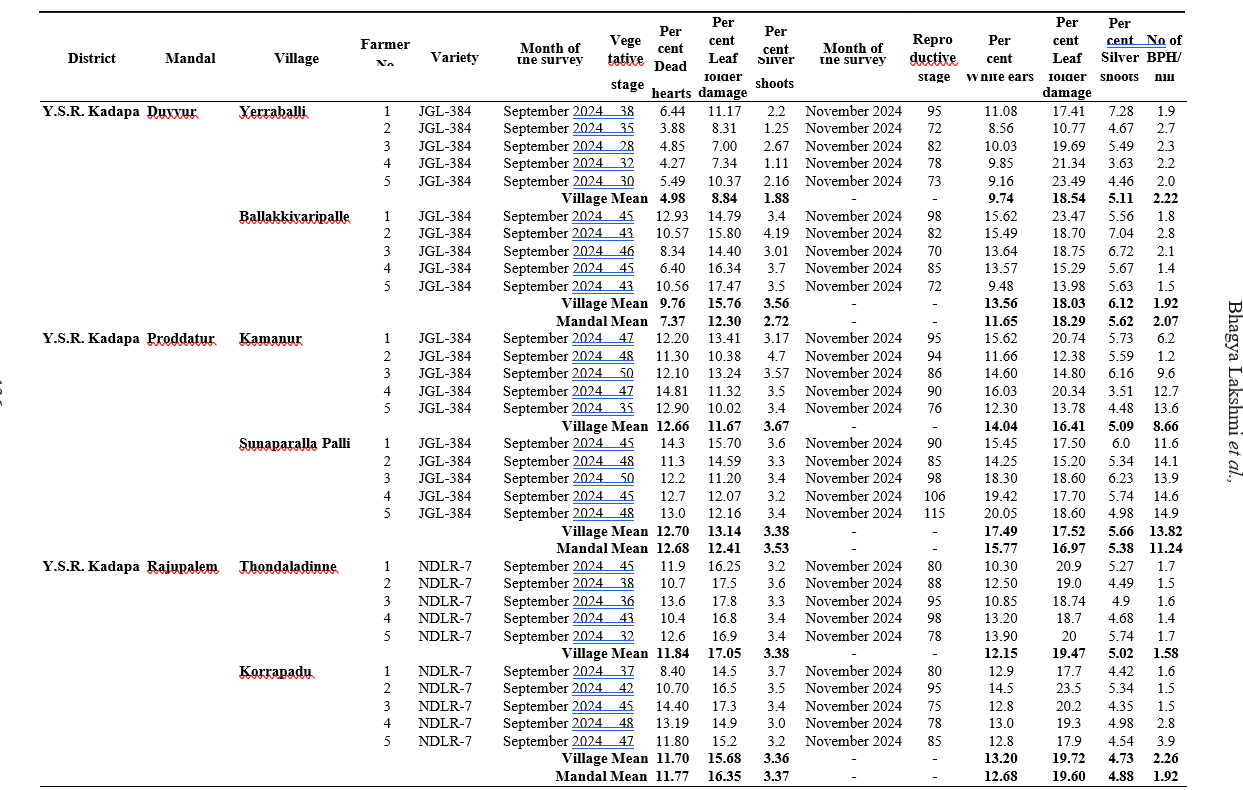
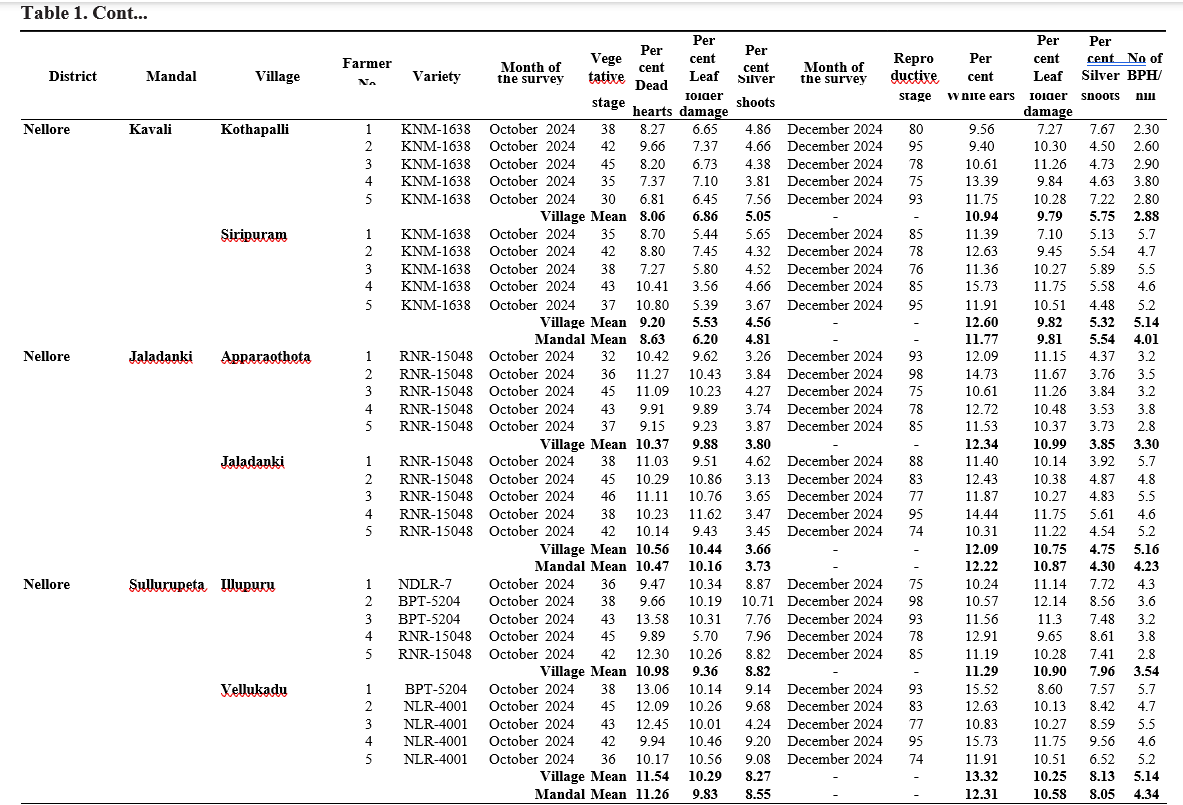
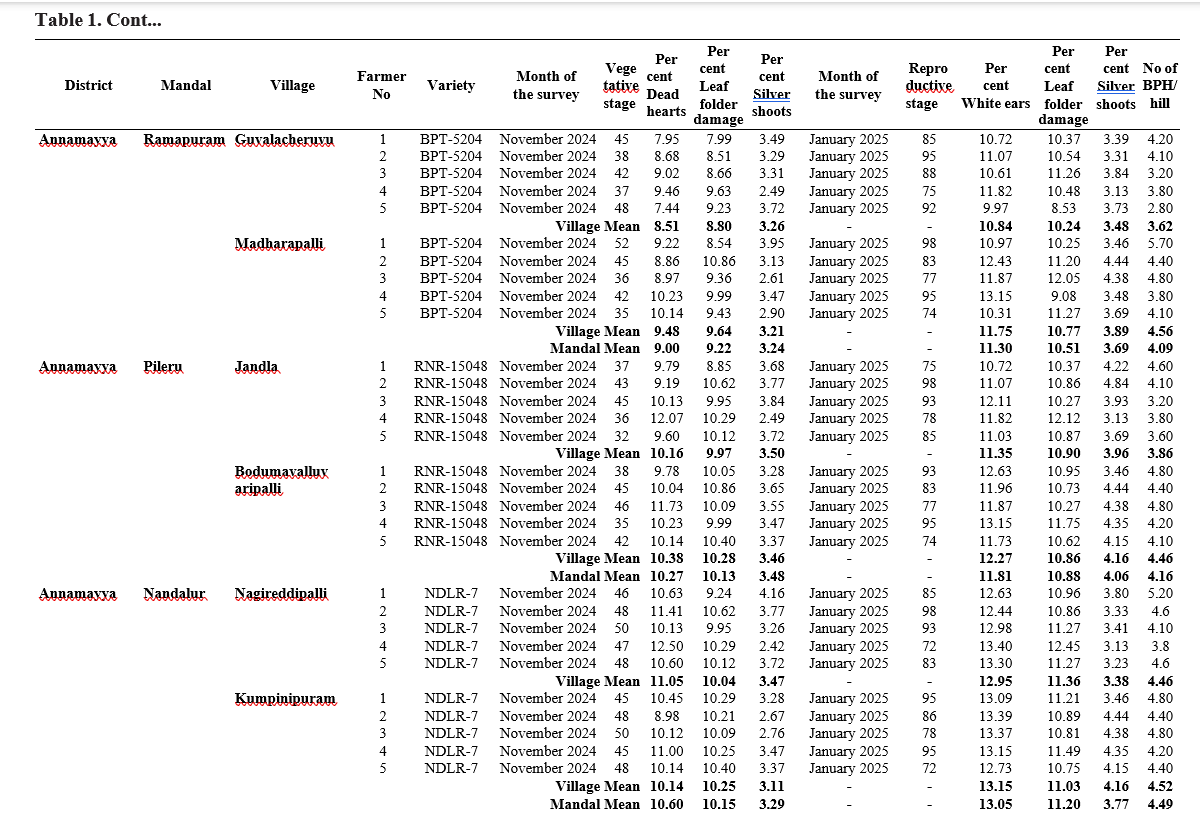
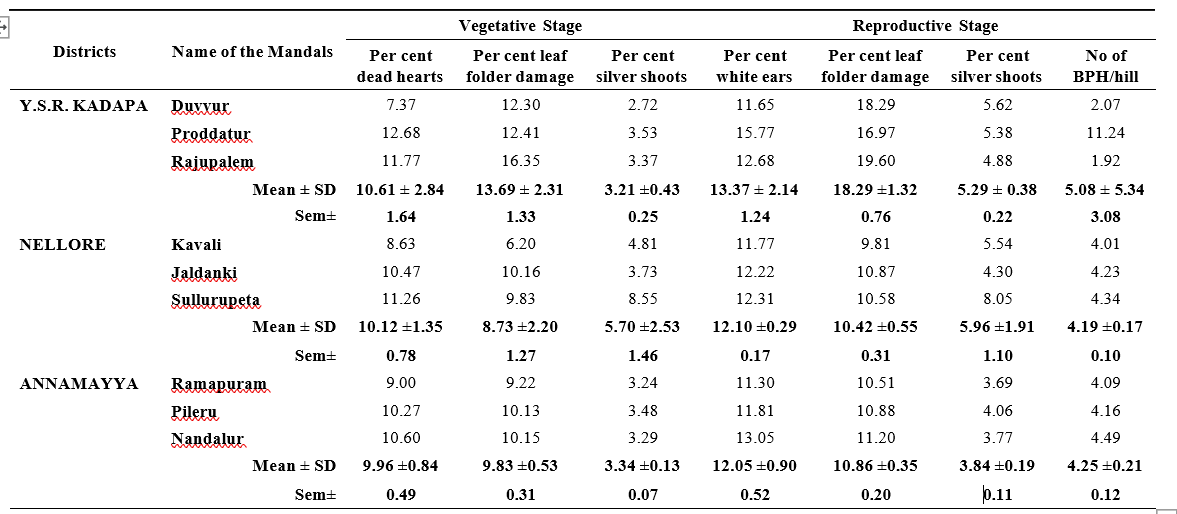
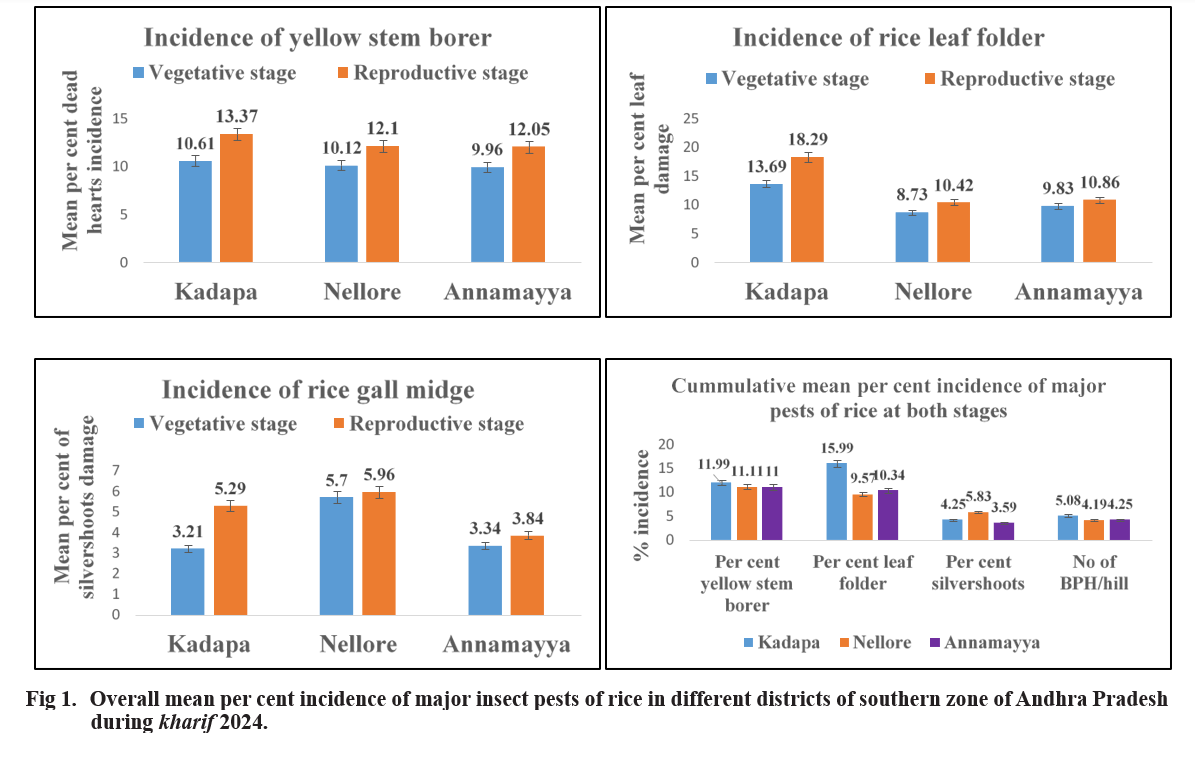
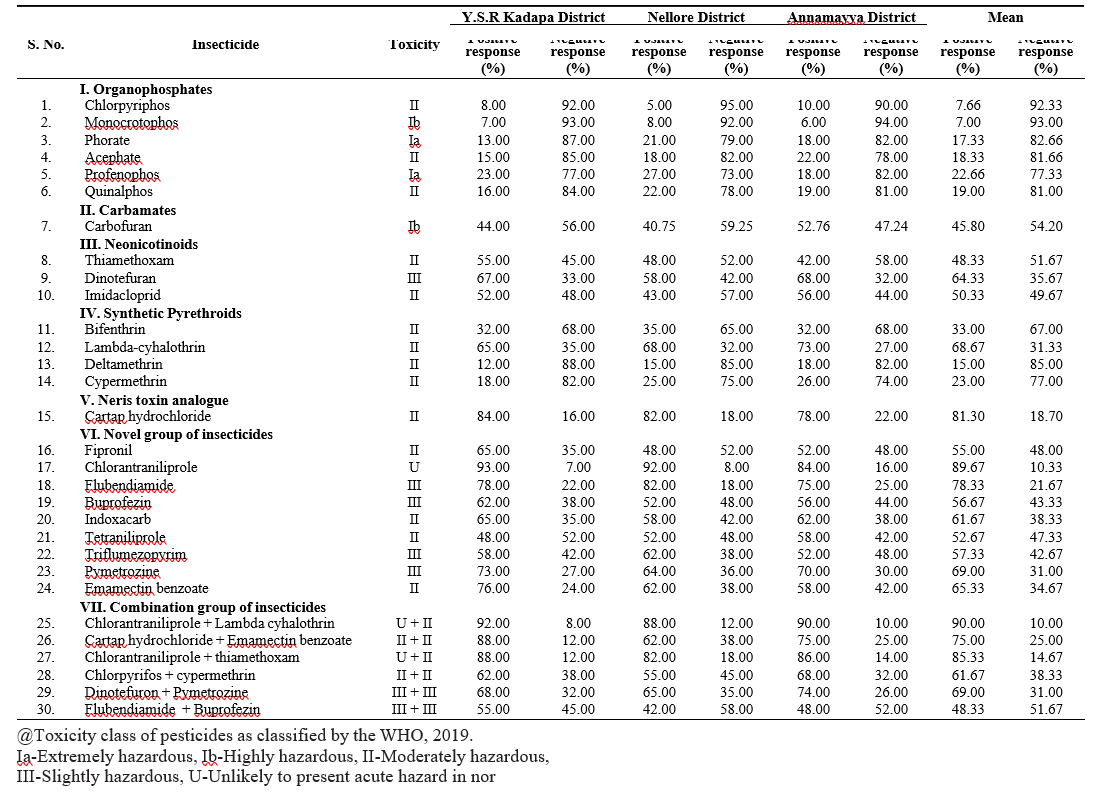
Table 3. Types of insecticides used by the farmers in the surveyed area of Y.S.R Kadapa, Nellore and Annamayya Districts of Andhra Pradesh
BPH/hill) and Nellore (4.19 BPH/hill). The survey clearly indicates that yellow stem borer and leaf folder are the dominant pests across all the surveyed regions while rice gall midge and brown planthopper were observed at moderate levels (Table 2) (Fig 1).
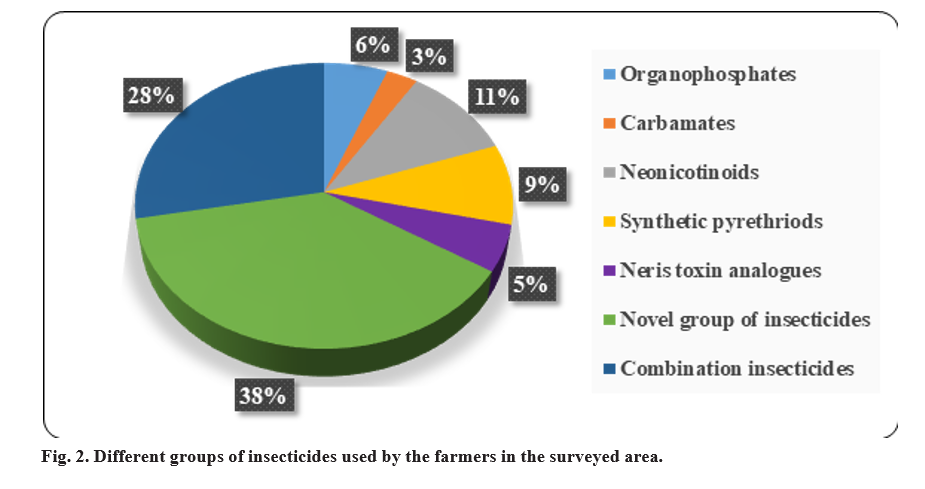
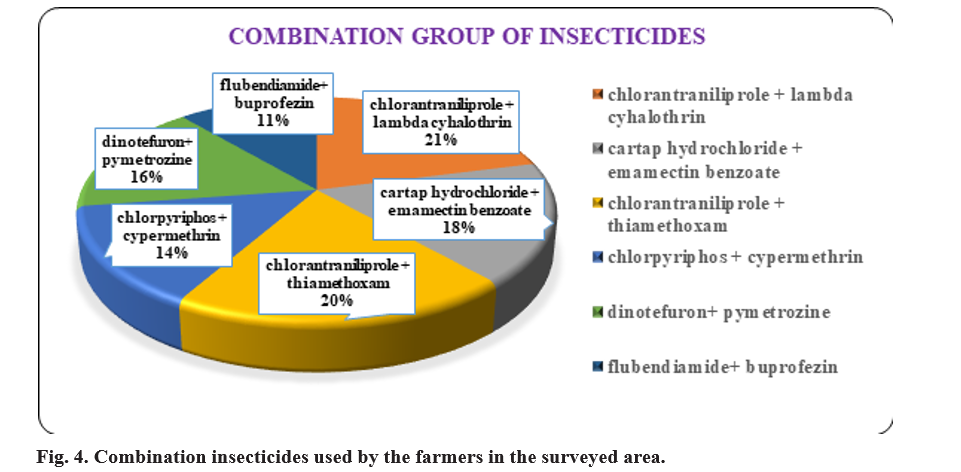
In survey of the insecticide usage pattern followed by the rice growers, out of 90 farmers it was observed that farmers solely depend on chemical pesticides for controlling insect pests that, 24 insecticides belonging to wide variety of chemical groups (6 sub-groups) and 6 combination group of insecticides were being used by the farmers to control insect pests (Table 3). The results on group stratification of insecticides usage revealed that insecticides of novel group of insecticides (38.00%) were the most commonly used insecticides by the farmers followed by combination group of insecticides (28.00%), neonicotinoids (11.00%), Synthetic pyrethriods (9.00%), organophosphates (6.00%), nereis toxin analogues (5.00%) and carbamates (3.00%) in the surveyed area of Y.S.R. Kadapa, Nellore and Annamayya districts of Andhra Pradesh (Fig 2, Fig 3 and Fig 4).
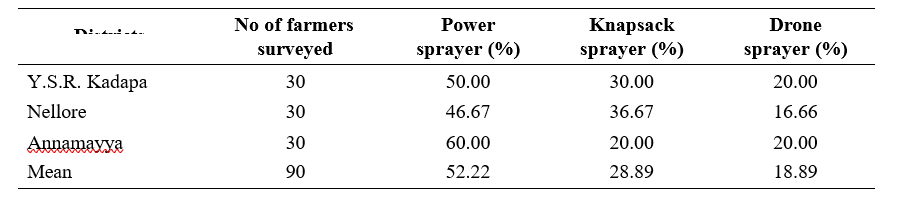
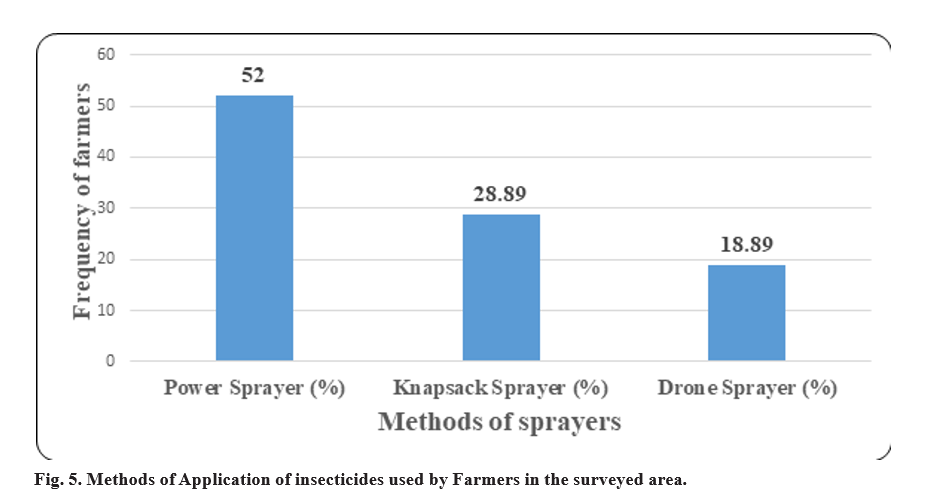
The method of insecticide application followed by rice farmers across Y.S.R. Kadapa, Nellore, and Annamayya districts showed notable differences. Among the 90 farmers surveyed, the majority (52.22%) used power sprayers, followed by knapsack sprayers (28.89%), while drone sprayers were adopted by 18.89%. The results highlight a transitional trend in pest management practices, where conventional methods are still preferred, but a positive shift toward modern UAV- based spraying is evident (Table 4) (Fig 5).
The present findings were supported by the findings of Ghosh et al. (2016) in Burdwan district, West Bengal

and they reported that yellow stem borer and leaf folder were the major and serious pests of rice crop. Similar findings were also reported by Saini et al., (2015) who recorded twelve species of insect pests from basmati rice and among them, yellow stem borer and leaf folder were dominant pests of rice in Meerut. Rath et al., (2020) studied biodiversity of pests of rice in Odisha and observed that yellow stem borer, leaf folder and brown planthopper as potential pests of rice. While studying the major pests of rice in Madhya Pradesh Bisen et al.,
(2019) found that yellow stem borer was more in the mid to last of September, leaf folder increases at the time of reproductive phase in the mid of September and the effect of brown planthopper was more from September to November. Singh and Singh (2017) who also observed that yellow stem borer were considerably high during vegetative and reproductive stage of rice crop. Mamathad et al. (2020) conducted survey on incidence of Asian rice gall midge and reported 6.95 to 9.03 per cent of mean silver shoot damage in Cauvery and Kabini command area, Karnataka.
The insect pests are one of the most important production constraints in rice crop. Roving surveys in Y.S.R. Kadapa, Nellore, and Annamayya districts revealed that yellow stem borer and leaf folder were the predominant insect pests, while rice gall midge and brown planthopper occurred at moderate levels. If we go for total control of pests, it is very essential to know the pest species, their time of occurrence and peak period of activity in this ecosystem of that region. Therefore, proper monitoring of pest species, is important to avoid economic loss of the crop. Hence, the present study was undertaken to know the major insect pests of rice ecosystem in three districts, which will help to plan a proper pest management technique for rice field in this area. However, more survey is needed to record other pest species and major diseases associated with rice crop in this region.
Bisen, D., Bisen, U and Bisen, S. 2019. Studies on major insect pests of rice crop (Oryza sativa) at Balaghat district of Madhya Pradesh. Journal of Entomology and Zoology Studies. 7(2): 625-629.
Chaudhari, P.R., Tamrakar, N., Singh, L., Tandon, A., Sharma, D. 2018. Rice nutritional and medicinal properties. Journal of Pharmacognosy and Phytochemistry.7(2):150-156.
Dhaliwal, G.S.V., Jindal, P and Dhawan, A.Κ. 2010. Insect pest problems and crop losses: changing trends. Indian Journal of Ecology. 37: 1-7.
Ghosh, T.S., Azmi, S.A., Chatterjee, S and Dangar, T.K. 2016. Insect diversity and extent of infestation of major rice pests in Burdwan district, West Bengal, India. Entomon. 41(3):169-176.
http://www.indiastat.com/data/agriculture
Krishnaiah, K and Varma, N.R.G. 2013. Changing insect pest scenario in the rice ecosystem: A national perspective. Rice knowledge management portal, Directorate of Rice Research, Hyderabad.1-28.
Kumar, A., Kumar, P., Chandra, U., Patel, P.K., Omar, V., Pathak, R., Rajak, R.K.2023. Abundance of major insect pests in rice and their relation to weather parameters. International Journal of Environment and Climate Change.13(8):752-1760.
Mamathad, C., Vijay Kumar, L., Shivaray Navi, Somu, G and Sanathkumar, V.B. 2020. Survey on the incidence of Asian rice gall midge Orseolia oryzae (Cecidomyiidae: Diptera) in Cauvery command area. International Journal of Chemical Studies.8(6):1731-1735.
Nikhil, H.K., Jalgaonkar, V.N., Wade, P.S., Naik, K.V., Thantharate, S.H., Kinjale, R.S. 2021. Seasonal incidence of yellow stem borer, Scirpophaga incertulas Walker infesting rice and its correlation with weather parameters. Journal of Entomology and Zoology Studies.9(1):263-266.
Prasad, K. 2003. Survey on the incidence of pests of rice under rainfed low land ecosystem. Karnataka . Journal of Agricultural Science. 6(3):460.
Rath, P. C., Bose, H., Subudhi, S., Lenka and Jambhulkar, N. 2020. Biodiversity of Pests of Rice in Odisha. International Journal Current Microbiology Applied Sciences. 9(3): 566-569.
Sachan, S. K., D. V., Singh and Chaudhary, А. S. 2006. Seasonal abundance of insect pests associated with basmati rice. Annals of Plant Protection Science.14(1): 218-220.
Saini, U. P., Sachan, A., Pratap, B., Singh and Kumar, 2015. Insect pests associated with basmati rice in western plain zone of Uttar Pradesh, India. Plant Archives. 15 (2): 775-777.
Singh, S and Singh, B. K. 2017. Survey and fortnightly observation to find out major insect pests of rice crop (Oryza sativa) in Patna district of Bihar. Journal of Entomology and Zoology Studies. 5(1): 766-769.