

0 Views
Department of Entomology, S.V. Agricultural College, ANGRAU, Tirupati-517 502.
A roving survey was carried out in sunflower cultivating areas of Y.S.R Kadapa and Kurnool districts of Andhra Pradesh during rabi, 2024 to know the incidence of sucking pests complex and incidence of viral diseases in sunflower. From the selected districts, different mandals, viz., Thondur, Jammalamadugu, Peddamudiyam, Pattikonda, Yemmiganur and Nandavaram were surveyed randomly for the incidence of sucking pests and viral diseases at crop growth period. Results revealed that whitefly and leafhopper population were more when compared to thrips. The highest mean number of whitefly population per six leaves was recorded in mandal of Thondur (8.69) during the month of January in Y.S.R Kadapa district and followed by Jammalamadugu (8.36). The highest mean number of leafhopper population was recorded in mandal of Jammalamadugu (9.20) during the month of January in Y.S.R Kadapa district and followed by Peddamudiyam (8.78). The highest mean number of thrips population was recorded in mandal of Peddamudiyam (6.79) during the month of January in Y.S.R Kadapa district and followed by Jammalamadugu (6.01). The incidence of viral disease was recorded highest in Thondur mandal with 15.16 % and 12.59 % of leaf curl and necrosis diseases in Y.S.R Kadapa district respectively and among two districts surveyed the highest mean number of whiteflies, thrips and leafhopper population were noticed in Y.S.R Kadapa district. Highest incidence of leaf curl and necrosis i.e, 16.67 % and 12.57 % were observed in Nandavaram mandal of Kurnool district.
KEYWORDS: Sunflower, Sucking pest, whitefly, thrips, leafhopper, viral disease, leafcurl, necrosis.
Sunflower (Helianthus annuus L.) is an annual oilseed crop primarily grown for its edible oil and seeds in temperate and subtropical climates worldwide and native to North America. Sunflower seeds contain different micronutrients, macronutrients, saturated and unsaturated fatty acids, vitamins like B1 and minerals (Skoric et al., 2008). Sunflower oil majorly contains 59% linoleic acid (polyunsaturated omega-6), 30% oleic acid (monounsaturated omega-9), 6% stearic acid and 5% palmitic acid (Avni et al., 2016). One of the reasons for this is the occurrence of serious insect pests and viral diseases. Sunflower is attacked by nearly 250 species of insects (Basappa and Santha Lakshmi Prasad, 2005). Thrips Thrips palmi (Karny), leafhoppers Amrasca biguttula biguttula (Ishida), whiteflies Bemisia tabaci (Gennadius) are the major sucking pests contributing to yield loss. Thrips attack tender plant parts, result in stunted growth in addition to transmission of the necrosis disease (Chander Rao, 2002). Leaf hoppers (Amrasca biguttula biguttula) suck sap (Jayewar et al., 2018) leading to hopper burn symptoms. Recently, whitefly
Bemisia tabaci emerged as a new pest and as a vector of leaf curl begomovirus.
In the recent past, another viral disease caused by a begomovirus has been observed in Northern Karnataka, producingleafcurlsymptomsmainlyonSunbreed-275and KBSH-44 upto 40% and 10% respectively (Govindappa et al., 2011). Similar kind of disease symptoms were also observed in Aruna and Swathi hybrids of sunflower predominantly grown in Kurnool district in the past two years where in the disease incidence of 85-90% was recorded. The prominent symptoms are small size and malformed leaves, leaf and veinal thickening, enations and upward leaf curling, emerging leaves exhibits yellow discolouration and severe reduction in leaf size. The early infected plants are stunted with no ear head emergence (Venkataramanamma et al., 2022). The disease significantly affects the plant height, head diameter, seed weight and oil percentage (Deepa et al., 2015). As per the third advanced estimates of 2023-24 (DES), the acreage under sunflower came down drastically to 1.58 lakh ha-1 with estimated production of 1.69 lakh tonnes (ICAR-IIOR Annual Report of Sunflower, 2023-24). In India, during 2023-24, sunflower was cultivated in an area of 1.51 lakh ha with 1.72 lakh tonnes of production and 1144 kg ha-1 of productivity. Sunflower is grown in all the three cropping seasons – kharif, rabi and summer in Andhra Pradesh. sunflower was cultivated on an area 0.04 lakh ha with 0.038 lakh tonnes of production and 886 kg ha-1 of productivity in 2023-24. (https://www.indiastatagri.com/).
A roving survey was conducted to record the incidence of sucking pest complex in major sunflower growing areas of Andhra Pradesh during rabi season, 2024-2025. The districts covered under this study were Y.S.R. Kadapa and Kurnool districts of Andhra Pradesh during rabi from December 2024 to March 2025. From each district, three mandals and five villages from each mandal were selected based on the sunflower area. From each Village, the survey was undertaken in five farmer fields. In each location five plants were selected randomly in a field. Whitefly, thrips and leafhoppers population were counted in sunflower crop by counting the number of nymphs and adults on six leaves i.e., two at bottom, two at middle and two at the top per plant during vegetative stage to flowering stage. In order to study the symptoms of the disease, healthy sunflower plants and sunflower leaf curl infected plants were compared during roving survey from different locations. The symptoms exhibited by the diseased plants were recorded in various stages of crop growth.
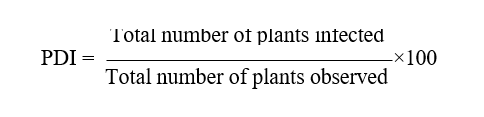
The incidence of the disease was recorded during the survey on naturally infected plants by using following equation as suggested by Wheeler (1969). The zigzag pattern is followed to collect required data in which ten randomly selected plants were evaluated at each location.
Whiteflies (Bemesia tabaci): The results of the survey conducted during 2024-25, revealed that, the mean population of whiteflies in different mandals in Y.S.R Kadapa district ranged between 3.25 to 8.14 whiteflies/6 leaves during December to March months and in Kurnool district the mean population ranged from 3.59 to 7.26 whiteflies / 6 leaves (Table 2 & Figure 1). Similar results were observed Kumari et al., (2023) on pulses in farmers field from second fortnight of June 2020 and 2021 to first fortnight of October 2020 and 2021 in Mahendergarh, Rewari and Gurugram districts of Haryana. The population whitefly (7.71 whitefly/ plant), was more abundant in Gurugram district as compared to Mahendragarh and Rewari districts. Overall survey studies revealed that sucking pest population and its incidence depends on various climatic factors, it’s geographic allocation, genotypes and farmer’s cultivation practices.
Thrips (Thrips spp.): The mean population of thrips in different mandals in Y.S.R Kadapa district ranged between 3.03 to 5.98 thrips / 6 leaves during December to March months and in Kurnool district mean population ranged from 2.40 to 4.96 thrips / 6 leaves (Table 2 & Figure 1).
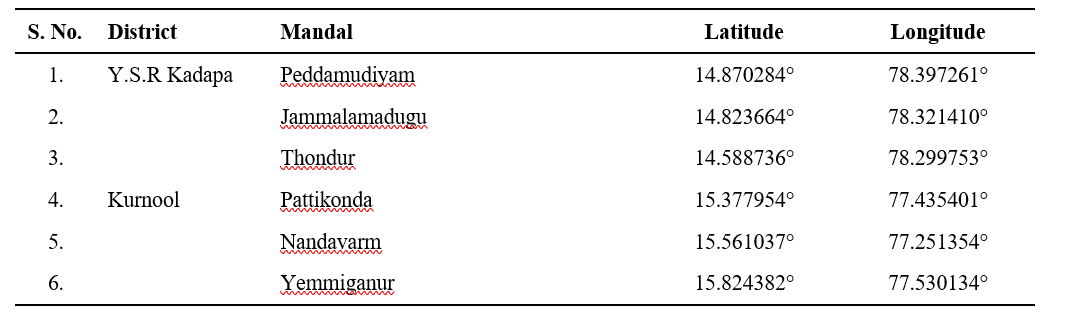
Table 2. Occurrence of sucking pest complex on sunflower in Y.S.R Kadapa and Kurnool district of Andhra Pradesh during rabi, 2024-2025
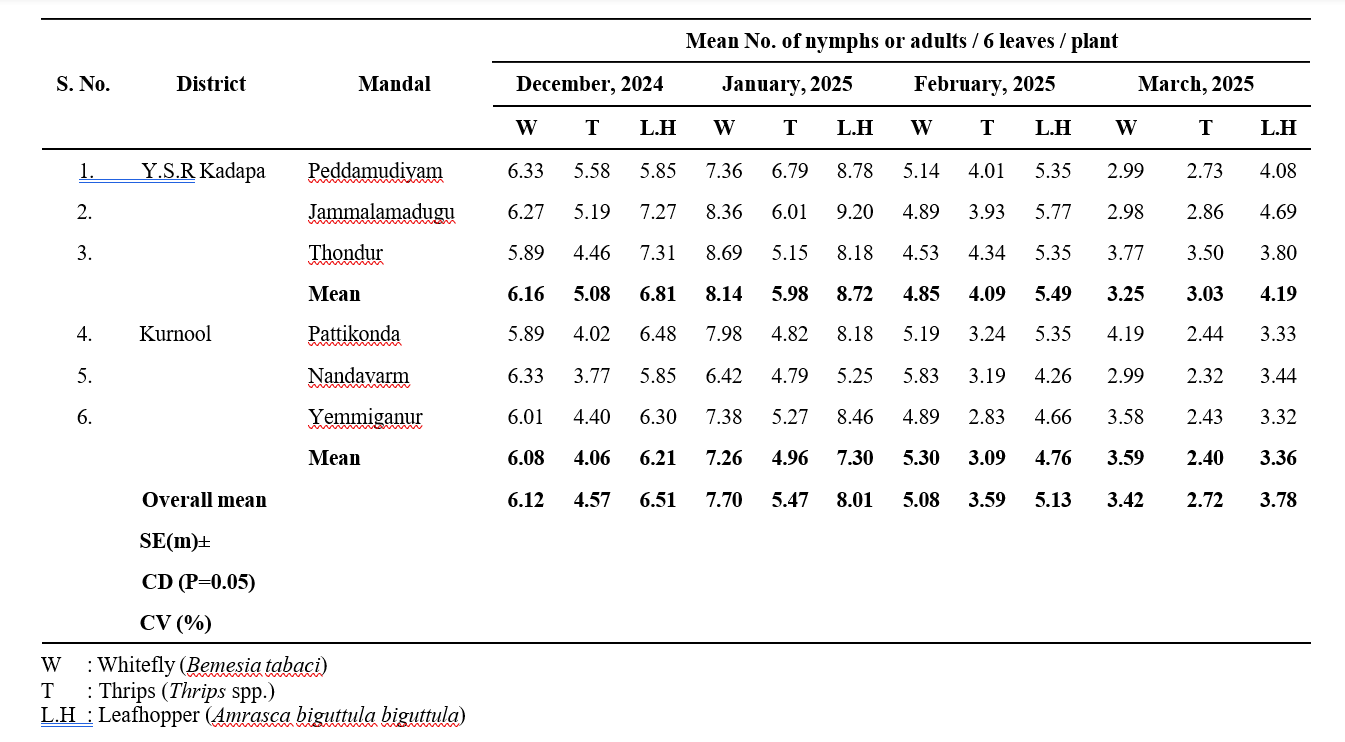
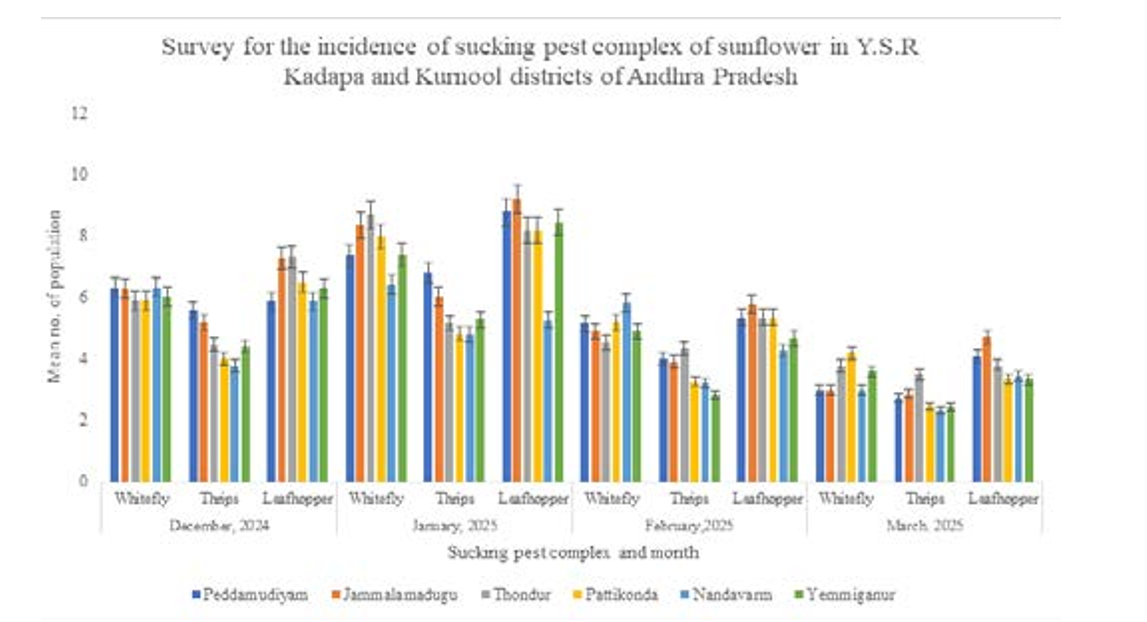
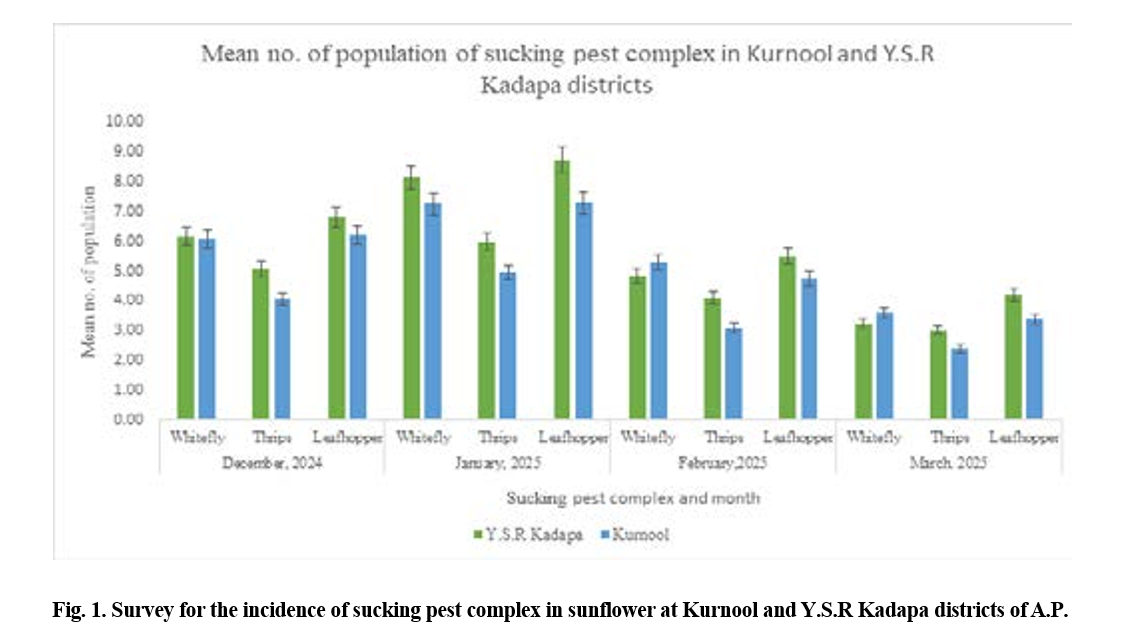
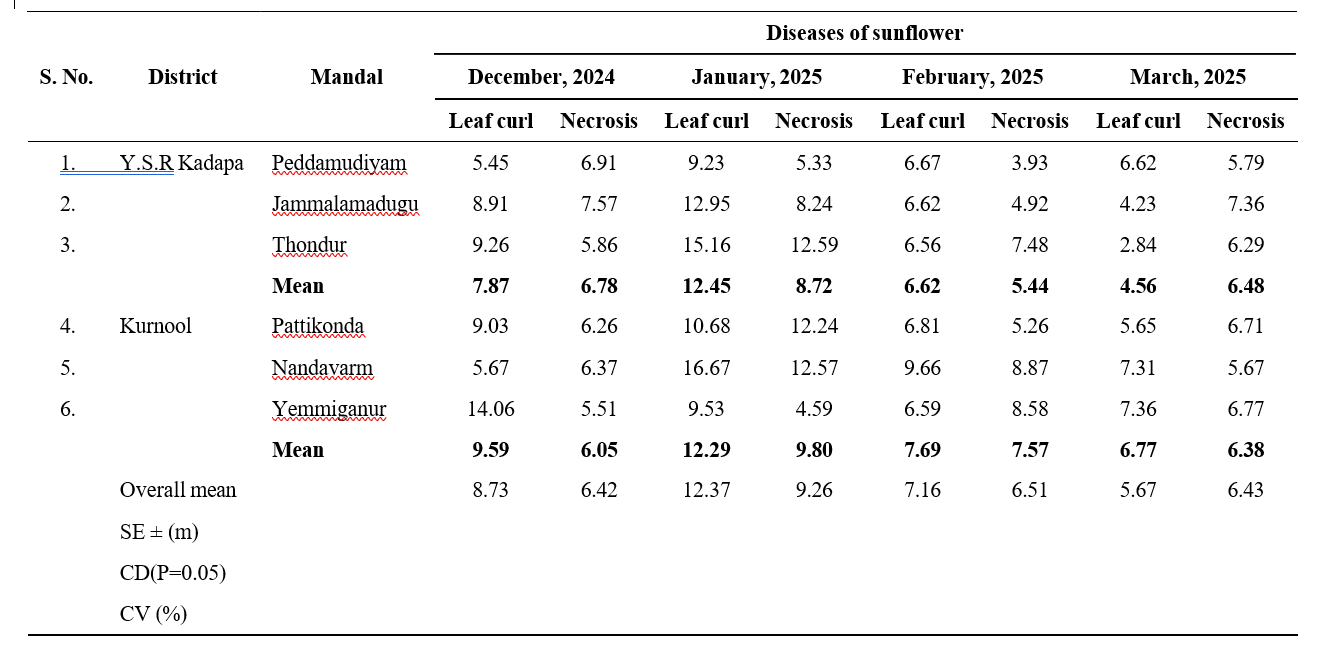
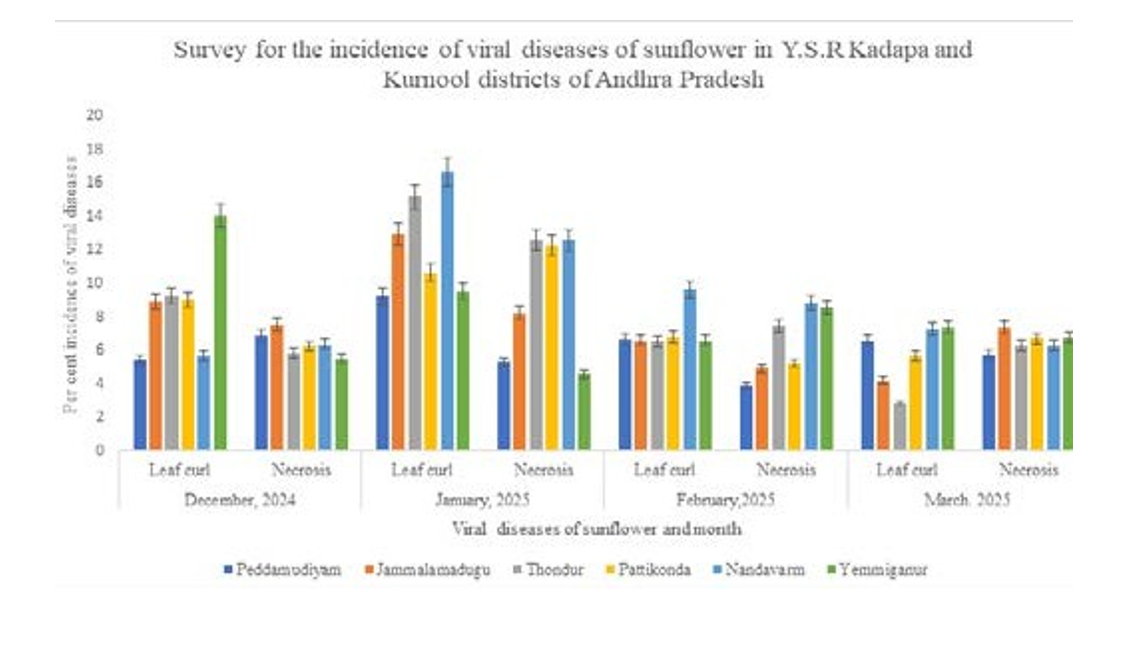
Table: 3 Incidence of viral diseases of sunflower in Y.S.R Kadapa and Kurnool district of Andhra Pradesh during rabi, 2024-2025
The results are in confirmity with the findings of Nayak et al., (2022) who studied on seasonal abundance of insect pests in sunflower in the Western Undulating zone of Odisha during 2019-2020. The sucking pest of thrips appeared at early growth stage of sunflower and continued to build up and attained the peak during 50-51 MW with highest population of 1.80 / leaf.
Leafhoppers (Amrasca biguttula biguttula): The mean population of leafhopper in different mandals in Y.S.R Kadapa district ranged between 4.19 to 8.72 leafhopper / 6 leaves during December to March month and in Kurnool district the mean population ranged from 3.36 to 7.30 leafhopper / 6 leaves (Table 2 & Figure 1).
Similar results were observed by Kumari et al. (2023) on pulses in farmers field from second fortnight of June 2020 and 2021 to first fortnight of October 2020 and 2021 in Mahendergarh, Rewari and Gurugram districts of Haryana. The population of leafhopper (6.96 leafhopper/plant) was more abundant in Gurugram district as compared to Mahendragarh and Rewari districts.
The present information on the status and diversity of the sucking insect pests of sunflower crop eco systems in Y.S.R Kadapa and Kurnool districts will help to formulate the priority research strategies by researchers. The knowledge on sucking insect pest scenario in sunflower crop ecosystems will also help the extension workers and farmers in deciding the judicious use of insecticides.
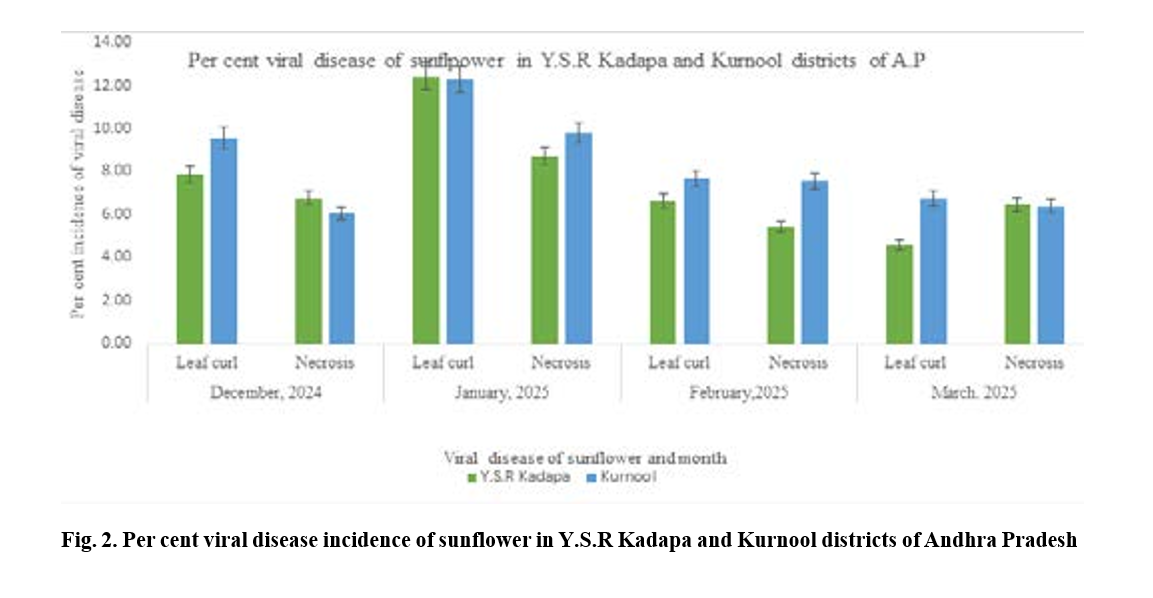
Viral disease of leaf curl (Transmitted- whitefly): The per cent incidence of leaf curl viral disease in different mandals in Y.S.R Kadapa district ranged between 4.56 to 12.45 % during December to March months and in Kurnool district the per cent incidence of leaf curl viral disease ranged from 6.77 to 12.99 % (Table 3 & Figure 2).
Similar results were observed Deepa et al., (2015) and the experiment was carried out to assess the crop loss due to sunflower leaf curl virus (SuLCV) disease. The crop loss assessment in terms of growth and yield components was recorded at first appearance of symptoms of SuLCV at 30 days to 90 days during the crop growth. The SuLCV disease infection in sunflower
significantly affected the plant height (72.60 to 157 cm), size of the head (8.60 to 18.78 cm), 100 seed weight (2.20 to 6.32 g), oil content (31.24% to 38.26%), and weight of seeds/10 heads (77.20 to 372.2 g) as compared to the healthy control plants. In the plants, first appearance of symptoms at 30 DAS was recorded the seed yield loss of 79.25 per cent.
Viral disease of necrosis (Transmitted- Thrips): The per cent incidence of necrosis viral disease in different mandals in Y.S.R Kadapa district ranged between 6.48 to 8.72 % during December to March months and in Kurnool district the per cent incidence of necrosis viral disease ranged from 6.05 to 9.80 % (Table 3 & Figure 2).
The results are in confirmity with the findings of Bestar (2004) who reported that sunflower necrosis virus disease was prevalent in all the sunflower fields visited. The incidence ranged, 1 per cent at Dambal (Gadag) to 65 per cent at Navalgund and Devikoppa (Dharwad). Incidence and severity were higher in the fields grown with ITC-Zeneca sunflower hybrid (PAC-36). Maximum disease was observed in Dharwad district and minimum was recorded at Gadag district.
The results are in confirmity with the findings of Lokesh et al., (2008) who conducted a survey to know the sunflower necrosis virus disease and stated that the disease was prevalent in all the sunflower fields with the maximum necrosis disease incidence of 24 per cent in 2005. The highest incidence of necrosis of 22 per cent and high mean thrips numbers 2.42 per five plants was observed on KBSH-1 in Bagepalli taluk in 2006. However, least incidence of necrosis disease was observed in Bangalore (4%), and Shimoga (4%) followed by HD Kote (6%) and Honnalli (6%) during September 2006 and concluded that the disease and the thrips vectors were least during rabi months whereas, it were more in kharif sown crops.
Avni, T., Anupriya, S., Rai, P., Maan, K and Naryansamy, C.C.N. 2016. Effects of heating and storage on nutritional value of sunflower oil. DU Journal of Undergraduate Research and Innovation. 2(1): 196-202.
Basappa, H and Santha Lakshmi Prasad, M. 2005. Insect pests and diseases of sunflower and their management. Directorate of Oil Seeds Research, Hyderabad. 70.
Bestar, G. 2004. Epidemiology and management of sunflower necrosis disease. M.Sc. (Ag.) Thesis, University of Agricultural Sciences, Dharwad.
Chander Rao, S. 2002. First report of tobacco streak virus infecting safflower (Carthemus tinctorius) in Maharashtra, India. Plant Disease. 87: 1396.
Deepa, D., Gururaj Sunkad, G.S., Govindappa, M.R., Naik, M.K and Suresh, S.R. 2015. Estimation of yield loss in sunflower due to new sunflower leaf curl virus disease at different stages of crop growth. International Journal of Plant Protection. 42(8): 138141.
Deepa., Gururaj, S., Govindappa, M.R., Naik, M.K and Suresh, S.R. 2015. Estimation of yield loss in sunflower due to sunflower leaf curl disease at different stages of crop growth. International Journal of Plant Protection. 8(1): 138-41.
Govindappa, M.R., Shankergoud, I., Shankarappa, K.S., Wickramaarachchi, W.A.R.T., Reddy, B.A and Rangaswamy, K.T. 2011. Molecular detection and partial characterization of begomovirus associated with leaf curl disease of sunflower (Helianthus annuus) in Southern India. Plant Pathology Journal. 10(1): 29-35.
ICAR-Indian Institute of Oilseeds Research, Annual Report of Sunflower, 2023-24. Rajendranagar, Hyderabad.
Jayewar, N.E., Mutkule, D.S and Kadam, D.R. 2018. Germplasm evaluation for resistance against major lepidopteran pests in sunflower. International Journal of Current Microbiology and Applied Science. 6: 63-70.
Kumari, S., Singh, B and Dumra, N. 2023. Survey for the incidence of insect-pests of pulses in South-West Haryana. The Pharma Innovation Journal. 12(9): 432-437.
Lokesh, B.K., Maraddi, G.N., Agnal, M.B and Upperi, S.N. 2008. Survey for the incidence of necrosis virus disease and thrips in sunflower growing areas of southern Karnataka. International Journal of Plant Protection. 2(1): 213-259.
Nayak, S.K., Khura, N and Moharana, R.L. 2022. Seasonal abundance of insect pest and natural enemies in sunflower in the Western undulation zone of Odisha. The Pharma Innovation Journal. 11(5): 245-248.
Skoric, D., Jocic, S., Sakac, Z and Lecic, N. 2008. Genetic possibilities for altering sunflower oil quality to obtain novel oils. Canadian Journal of Physiology and Pharmacology. 86(4): 215-22.
Venkataramanamma, K., Neelima, S., Prabhakar, K and Kalyani, D.L. 2022. Management of leaf curl disease of sunflower under field conditions. Agricultural Research Journal. 59(3): 447-452.
Wheeler, B.E.J. 1969. An Introduction to Plant Diseases.
John Wiley and Sons Limited, London. 301.