

0 Views
Department of Genetics and Plant Breeding, S.V. Agricultural College, ANGRAU, Tirupati-517 502.
Forty foxtail millet germplasm accessions including two checks (SiA 3156 and SiA 3159) were studied for 18 yield and morpho-physiological traits to estimate genetic parameters, including variability, per se performance, heritability, and genetic advance as per cent of mean (GAM) at wetland farm, S. V. Agricultural College, Tirupati, Acharya N. G. Ranga Agricultural University, Andhra Pradesh, during rabi 2024–25. The analysis of variance confirmed substantial variation across all traits, with accessions SiA 4322, SiA 4227, and SiA 4350 demonstrating superior performance for most traits accompanied with high grain yield per plant, suggesting their potential for commercial cultivation after assessing in multi-location trials. The phenotypic coefficient of variation (PCV) slightly exceeded the genotypic coefficient of variation (GCV), indicating environmental influence on trait expression. Traits such as transpiration rate, stomatal conductance, straw yield per plant, and grain yield per plant exhibited high PCV and GCV, contributing significantly to variability and selection potential. High heritability coupled with high GAM was noticed for traits viz., plant height, panicle length, specific leaf area, net photosynthetic rate, transpiration rate, stomatal conductance, protein content, straw yield per plant, and grain yield per plant indicated that these traits were administered by additive gene action, enabling improvement through direct selection.
KEYWORDS: Foxtail millet, Variability, PCV, GCV, Genetic advance, GAM, Heritability and Yield.
Foxtail millet (Setaria italica (L.) P. Beauv.), a self-pollinating, short-duration C4 cereal in the Poaceae family, ranks as the second most cultivated millet globally (Hariprasanna, 2016). Rich in protein (11–12%), dietary fiber (6–8%), calcium (31 mg/100g), and iron (2.8 mg/100g), with low fat (4%) and a low- to-medium glycemic index, it suits diabetic and gluten- free diets. Its drought tolerance makes it vital in rainfed semi-arid regions, driving its resurgence in global agriculture. With a small genome (515 Mb; 2n=2x=18) (Lata 2013) and short life cycle, foxtail millet is an ideal model for C4 metabolism and drought resilience studies. The global production of foxtail millet is estimated as 50 lakh tonnes annually (Anonymous 2022-23a). This production is predominantly concentrated in countries like China, India and Japan. Out of which China being the largest producer followed by India, there by contributing significantly to the global foxtail millet production. Despite of its rich history, its cultivation has become limited to specific areas in India like Andhra Pradesh, Tamil Nadu, Karnataka and Rajasthan. It is grown in area of 4.3 lakh hectares with a total production of 3.84 lakh tonnes annually with an average productivity of 893 kg per hectare (Anonymous 2022-23b). In Andhra Pradesh, foxtail millet is grown in districts viz., Anantapur, Kurnool, Prakasam and Guntur with 8350 hectares of area, producing 7631 tonnes and yielding an average of 914 kg per hectare annually (Anonymous 2022-23c).
Drought resilience studies in foxtail millet focus on understanding the genetic and physiological mechanisms that allows this crop to survive and thrive under water- deficient conditions and ensures food security in regions vulnerable to drought by developing tolerant varieties that can withstand and acclimatize to water paucity. Foxtail millet yields and productivity are generally influenced by various morpho-physiological traits like number of productive tillers, panicle length, primary branches, effective photosynthesis, leaf chlorophyll content, chlorophyll fluorescence, harvest index, drought and heat tolerance, resistance to pests and diseases. Trait- based breeding can enhance productivity and climate resilience, ensuring food security in drought-prone areas. This research aims to assess genetic variability among diverse foxtail millet genotypes to identify high- performing lines and develop an effective selection strategy for enhancing yield and adaptability.
The field experiment was carried out during rabi, 2024-25 at wet land farm, S.V. Agricultural College,
Tirupati, Acharya N. G. Ranga Agricultural University, Andhra Pradesh situated in Southern Agro- climatic Zone of Andhra Pradesh, India located at an altitude of 182.9 m above from mean sea level, 13° N latitude and 79° E longitude. The experimental material utilized for the present study comprised of 38 foxtail millet germplasm accessions with two standard check varieties obtained from various collections maintained at RARS, Nandyal. The experimental material was evaluated using Alpha lattice design with two replications. The observations were recorded on five randomly selected plants per plot for 18 morpho-physiological and yield-attributing traits such as days to 50% flowering, days to maturity, plant height (cm), number of productive tillers per plant, panicle length (cm), specific leaf area (cm² g-1), net photosynthetic rate (μmol CO2 m-2 s-1), transpiration rate (mmol H2O m−2 s−1), stomatal conductance (mmol H2O m−2 s−1), relative water content (%), canopy temperature (°C), chlorophyll fluorescence, SPAD chlorophyll meter reading (SCMR), protein content (%), 1000-grain weight (g), straw yield per plant (g), harvest index (%) and grain yield per plant (g).
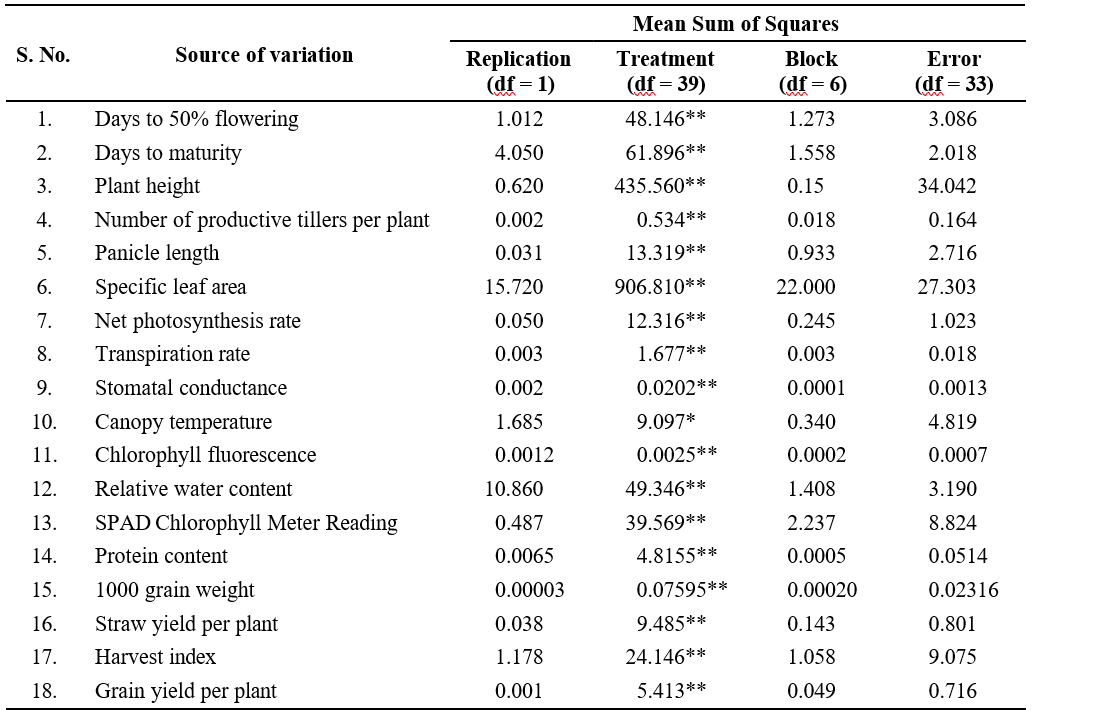
The analysis of variance (Panse and Sukhatme) revealed high significant differences among the genotypes under study for all 18 traits examined, suggesting considerable genetic variability among the evaluated accessions and substantial scope for genetic improvement through selection (Table 1). Average mean performance of the top ten high yielding accessions for a range of yield and morpho-physiological attributes were presented in Table. 2. The per se performance of genotypes viz., SiA 4322 (8.89 g), SiA 4227 (8.65 g) and SiA 4350 (8.41 g) performed exceptionally well for majority of the traits under study, when compared to that of best standard check SiA 3159 (8.03 g). Specifically,
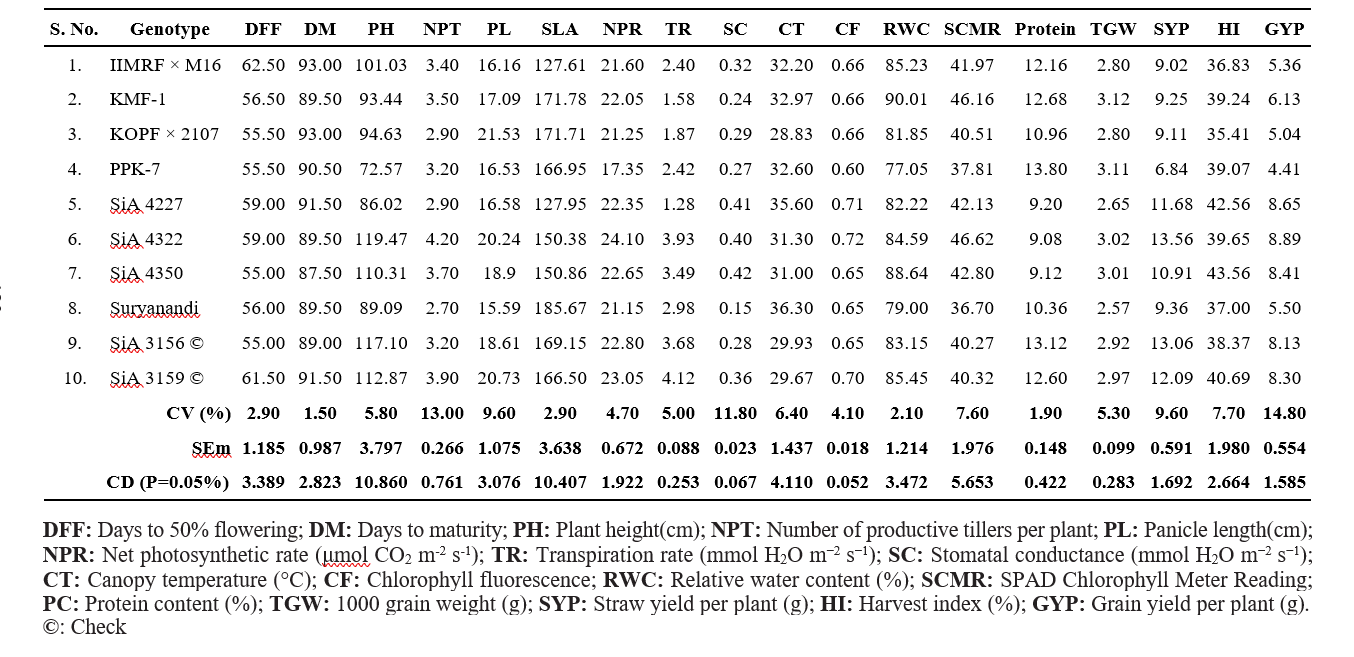
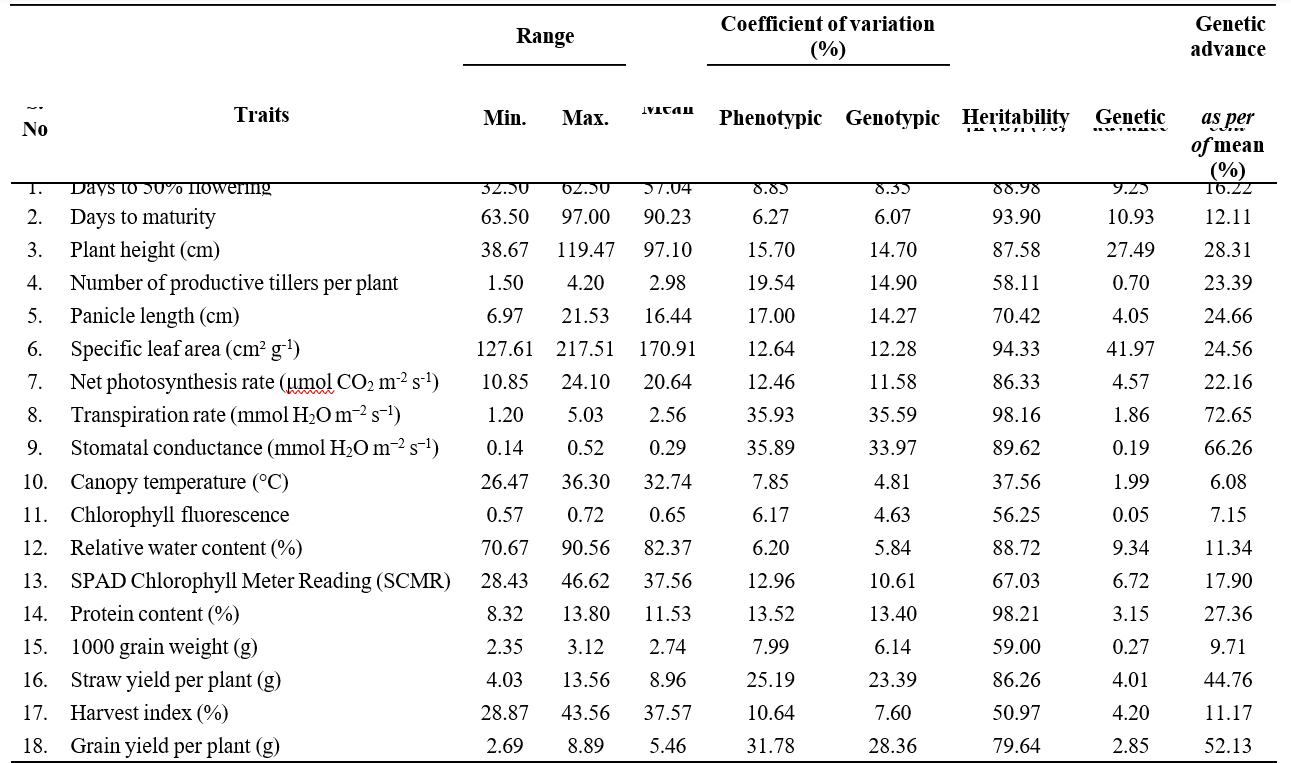
the genotype SiA 4227 recorded significant performance for the traits viz., grain yield per plant, harvest index, chlorophyll fluorescence, SCMR and net photosynthetic rate. In comparison, SiA 4322 excelled in most of the physiological traits, including net photosynthetic rate, stomatal conductance, chlorophyll fluorescence, SCMR and transpiration rate. Similarly, SiA 4350 was superior in the number of productive tillers per plant, harvest index, net photosynthetic rate, transpiration rate and grain yield per plant. The popular check variety SiA 3159 maintained its superiority in productive tillers, panicle length, net photosynthetic rate, transpiration rate, chlorophyll fluorescence and harvest index. Therefore these genotypes can be tested under multilocation trials and further utilized for commercial exploitation. Estimates of range of variation and genetic variability parameters for the 18 traits in 40 foxtail millet accessions are illustrated in Table 3.
In the present research work significant differences were noticed in the mean values for all the traits. The mean performance of traits viz., days to 50% flowering is ranged from 32.50 (SiA 3222) to 62.50 (IIMR FxM 16), days to maturity is ranged from 63.50 (SiA 3222) to 97.00 (SiA 4276), plant height is ranged from 38.67 cm (SiA 3222) to 119.47 cm (SiA 4322), number of productive tillers per plant is ranged from 1.50 (SiA 3222) to 4.20 (SiA 4322), panicle length is ranged from 6.97 cm (SiA 3222) to 21.53 cm (KOPFx 2107), specific leaf area is ranged from 127.61 cm2g-1 (IIMR FxM 16) to 217.15 cm2g-1 (SiA 4348), net photosynthetic rate is ranged from 10.85 μmol CO2 m-2 s-1 (SiA4315) to 24.10 μmol CO2 m-2 s-1 (SiA 4322), transpiration rate is ranged from 1.20 mmol H2O m−2 s−1 (SiA 4315) to 5.03 mmol H2O m−2 s−1 (SiA 4258), stomatal conductance is ranged from 0.14 mmol H2O m−2 s−1 (SiA 4331) to 0.14 mmol H2O m−2 s−1 (SiA 4279), canopy temperature is ranged from 26.47°C (SiA 4262) to 36.30°C (Suryanandi), chlorophyll fluorescence is ranged from 0.57 (SiA 3222) to 0.72 (SiA 4322), relative water content is ranged from 70.67% (SiA 4252) to 90.56% (SiA 4231), SPAD chlorophyll meter reading is ranged from 28.43 (SiA 3222) to 46.62 (SiA 4322), protein content is ranged from 8.32% ( SiA 4338) to 13.80% (PPK 7), 1000 grain weight is ranged from 2.35 g (SiA 4320) to 3.12 g (KMF 1), straw yield per plant is ranged from 4.03 g (SiA 3222) to 13.56 g (SiA 4322), harvest index is ranged from 28.87% (SiA 4326) to 43.56% (SiA 4350), grain yield per plant is ranged from 2.69 g (SiA 3222) to 8.89 g (SiA 4322).
The analysis on genetic variability indicated that the PCV estimates were marginally higher than the corresponding GCV values for all the traits studied, indicating that there is a moderate influence of environment on trait expression. The results and discussion of the genetic parameters for 18 morpho- physiological and yield-attributing traits were presented below (Table.3).
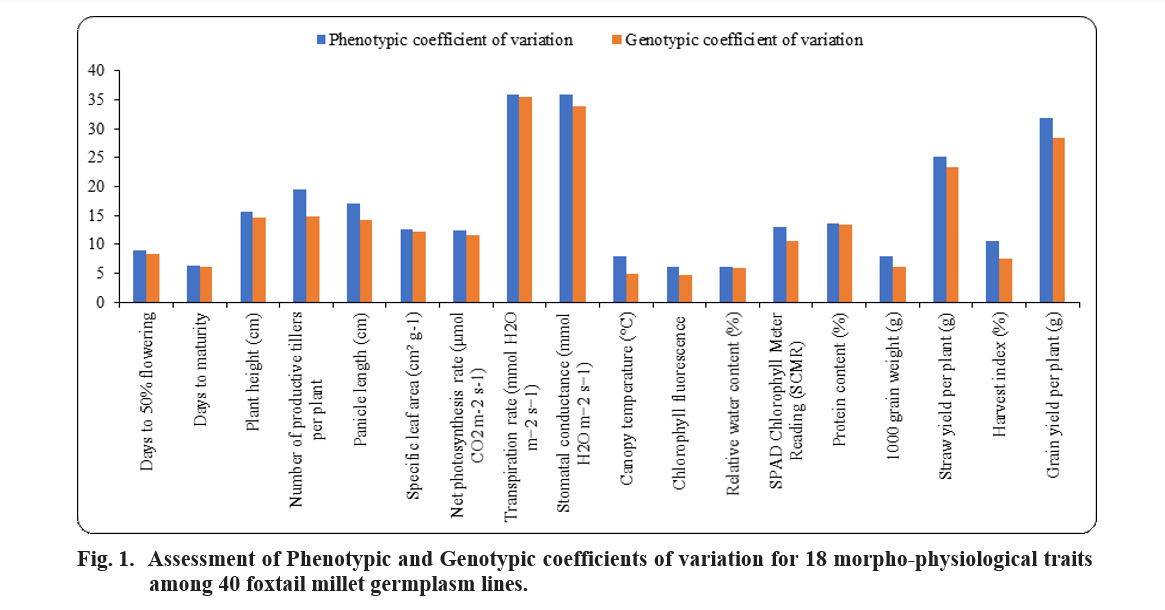
High PCV and GCV estimates (>20%) were recorded for the traits viz., transpiration rate (35.93% and 35.597%); stomatal conductance (35.89% and 33.97%); straw yield per plant (25.19% and 23.39%); grain yield per plant (31.78% and 28.36%) with less differences between PCV and GCV estimates indicating a preponderance of additive gene action and low environmental influence and scope for possible improvement through selection (Fig. 1). The results are in accordance with the results of Vardhan et al. (2024) and Harish and Lavanya (2022).
Moderate PCV and GCV were recorded by the traits viz., plant height (15.70% and 14.70); Panicle length (17.00% and 14.27%); number of productive tillers per plant (19.54% and 14.90%); specific leaf area (12.64% and 12.28%); net photosynthetic rate (12.46% and 11.58%), SCMR (12.96% and 10.61%) and protein content (13.52% and 13.40%). The similar results were obtained by Srilatha et al. (2020). Moderate PCV and GCV indicate substantial potential for improving these traits in the desired direction through selection processes.
The low estimates of PCV and GCV were recorded by days to 50% flowering, days to maturity, canopy temperature, chlorophyll fluorescence, relative water content and 1000 grain weight, suggesting that major role of genetic factors changing the expression of the trait with the environment.
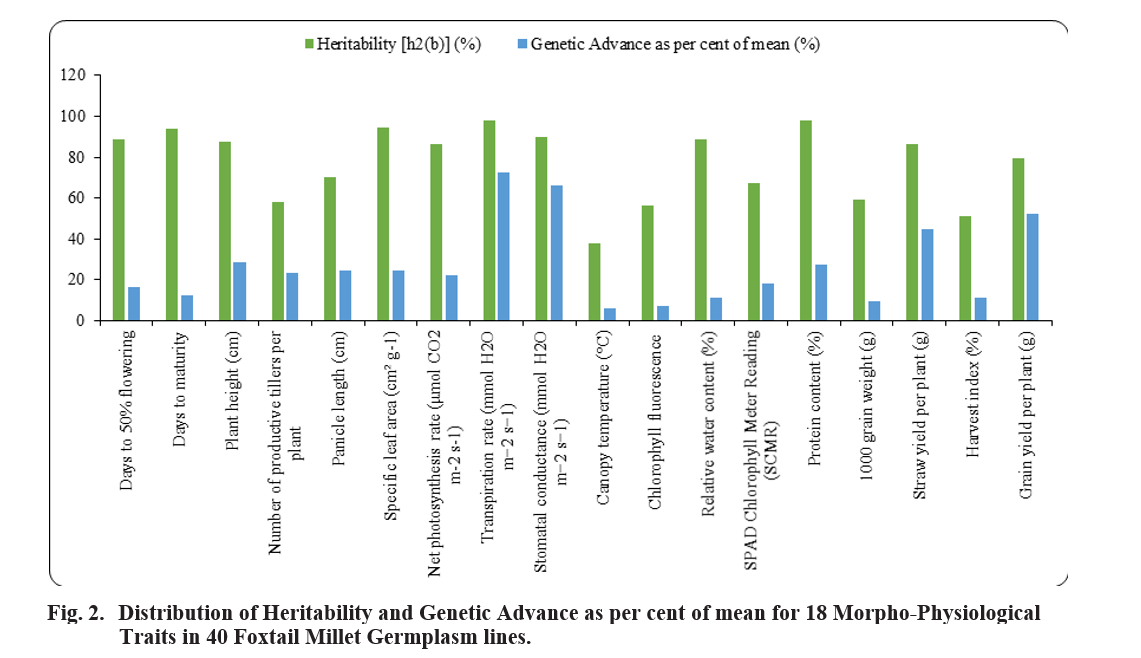
Genotypic coefficient of variation cannot provide a clear estimate of the genetic gain of the trait, that can be anticipated from phenotypic-based selection, unless the heritability is known (Burton G.W.). Heritability and genetic advance as a percent of mean (GAM) are key criteria for crop improvement. In this research, heritability estimates for the traits evaluated ranged from 37.56% to 98.21%, while GAM ranged from 6.08% to 72.65%. Trends for heritability and GAM are illustrated in Figure 2. High heritability was shown by the traits viz., days to 50% flowering (88.98%), days to maturity (93.90%), plant height (87.58%), panicle length (70.42%), specific leaf area (94.33%), net photosynthetic rate (86.33%), transpiration rate (98.16%), stomatal conductance (89.62%), relative water content (88.72%), SCMR (67.03%), protein content (98.21%), straw yield per plant (86.26%) and grain yield per plant (79.64%). Whereas high genetic advance as per cent of mean were reported by plant height (28.31%), number of productive tillers per plant (23.39%), panicle length (24.66%), specific leaf area (24.56%), net photosynthetic rate (22.16%), transpiration rate (72.65%), stomatal conductance (66.26%), protein content (27.36%), straw yield per plant (44.76) and grain yield per plant (52.13%). The results were inaccordance with Amarnath et al. (2018) and Bheemesh et al. (2018).
The estimates of heritability and genetic advance together are more accurate in assessing the potential genetic gain through selection (Johnson et al.1955). High heritability coupled with high GAM (Fig 2) was observed for plant height (87.58% and 28.31%), panicle length (70.42% and 24.66%), specific leaf area (94.33% and 24.56%), net photosynthetic rate (86.33% and 22.16%), transpiration rate (98.16% and 72.65%), stomatal conductance (89.62% and 66.26%), protein content (98.21% and 27.36%), straw yield per plant (86.26% and 44.76%) and grain yield per plant (79.64% and 52.13%). Similar findings were reported by Vardhan et al. (2024) and Yadav et al. (2024). This indicates the predominance of additive gene action in the inheritance of these traits and minimal environmental influence, making them amenable to improvement through simple selection. Prioritizing the selection of these traits would be beneficial for rapid improvement of grain yield in foxtail millet.
Higher estimates of heritability with moderate GAM values were recorded for the traits viz., Days to 50% flowering (88.98% and 16.22%), days to maturity (93.90% and 12.11%), relative water content (88.72%
and 11.34%) and SCMR (67.03% and 17.90%) which indicates the influence of both additive and non-additive genes effects in their inheritance. Meanwhile, moderate to high heritability with low GAM were shown by the traits viz., canopy temperature (37.56% and 6.08%), chlorophyll fluorescence (56.25% and 7.15%) and 1000 grain weight (59.00% and 9.71%) representing the major role of non-additive gene action and influence of the environment in the inheritance of these traits. To harness this non-additive genetic variance effectively, these traits may be benefit through hybridization followed by selection in advanced generations.
In conclusion, the traits such as transpiration rate, stomatal conductance, straw yield per plant and grain yield per plant indicated the presence of high variability, heritability and genetic advance as per cent of mean conforming sufficient variability and are primarily controlled by additive gene effects with minimal environmental influence, thus these traits are more amenable for direct selection. Therefore, it would be beneficial to place greater attention on selecting these traits for rapid improvement of grain yield in foxtail millet.
Amarnath, K., Prasad, A.V.S.D., Reddy, C.V.C.M and Sreenivasulu, K.N. 2018. Genetic variability in Indian foxtail millet genetic resources (Setaria italica (L.) Beauv). Green Farming. 9 (4): 612-614.
Anonymous. 2022-23a. FAOSTAT. 2022. Statistical database, Department of Agriculture, Food and Agricultural Organization of United Nations, Rome.
Anonymous. 2022-23b. Advanced estimate of Directorate of Economics and Statistics (DES), Ministry of Agriculture and Farmers Welfare (MoA & FW), India. (https://desagri.gov.in).
Anonymous. 2022-23c. Statistical abstract of Andhra Pradesh, directorate of economics and statistics. Andhra Pradesh. Area, Production and yield of principal crops. (https://des.ap.gov.in).
Bheemesh, S. J., Subba Rao, M and Reddi Shekhar, 2018. Genetic divergence studies for yield and physiological traits in foxtail millet. Bulletin of Environment, Pharmacology and Life Sciences. 7: 88-94.
Burton, G. W and Devane, E. H. 1953. Estimating heritability in tall fescue from replicated clonal material. Agronomy Journal. 45:478-481.
Hariprasanna, K. 2016. Foxtail millet: Nutritional importance and cultivation aspects. Indian farming. 73(1): 47-49.
Harish and Roopa Lavanya, G. 2022. Genetic variability and character association studies in foxtail millet (Setaria italica L.) for grain yield characters. International Journal of Environment and Climate Change.12(11): 2929-2938.
Johnson, H.W., Robinson, H.F and Comstock, R.E. 1955a. Estimates of genetic and environmental variability in soybeans. Agronomy Journal. 47: 314- 318.
Lata, C., Gupta, S and Prasad, M. 2013. Foxtail millet: a model crop for genetic and genomic studies in bioenergy grasses. Critical reviews in biotechnology. 33(3): 328–343.
Panse, V.G and Sukhatme, P.V. 1961. Statistical Methods of Agricultural Workers. 2nd Endorsement, ICAR Publication, New Delhi, India. 381.
Srilatha, J., Haritha, T., Reddy, C.V.C.M and Ramesh, 2020. Genetic variability studies for yield and nutritional traits in foxtail millet (Setaria italica (L.) Beauv.). Journal of Pharmacognosy and Phytochemistry. 9(6): 596-600.
Yadav, Y., Dhoot, R., Kumhar, S.R. and Roy, C. 2024. Estimates of variability, heritability and genetic advance in foxtail millets. Annals of Arid Zone. 63(1): 121-123.